Grief Is Funny Like That
Feb 02, 2026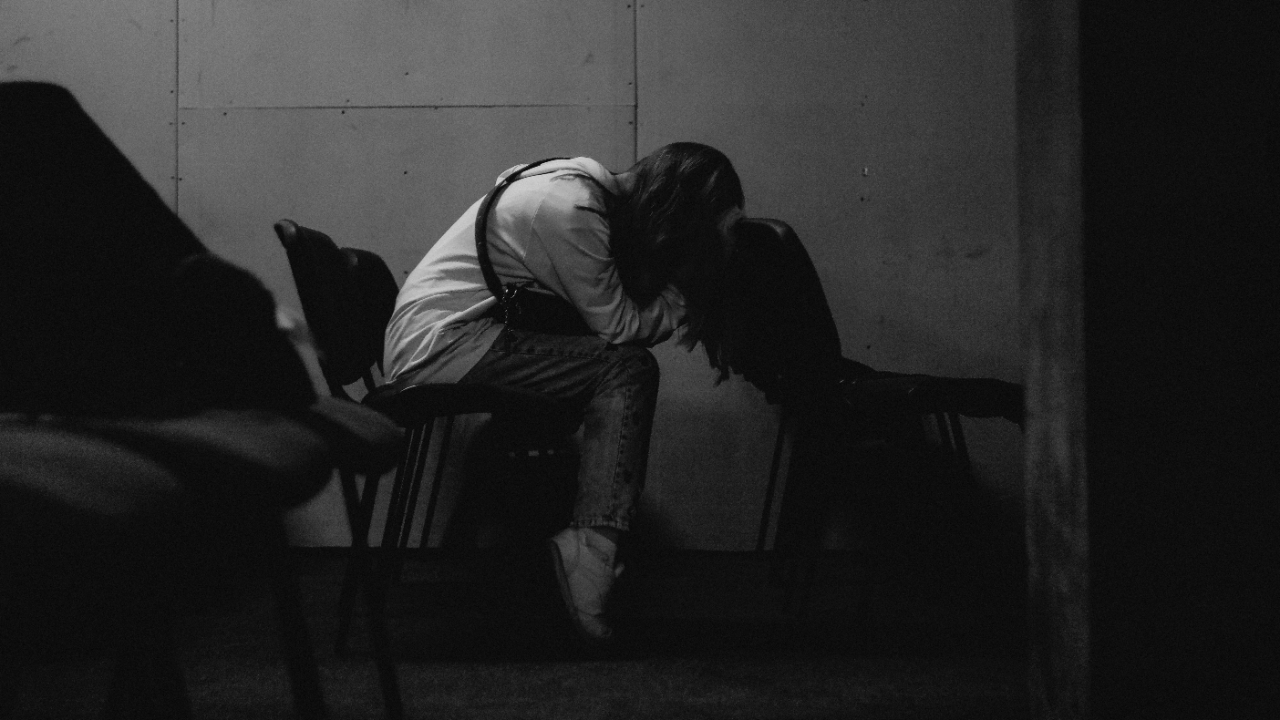
In the beginning, grief does not feel poetic. It does not feel spiritual. It does not feel like growth. It feels like you got hit by something you did not see coming and now you are walking around stunned.
Everything feels thick. You wake up and for a split second you forget. Then it hits again. The memory. The reality. The finality. And your body reacts before your brain can even catch up. Your chest tightens. Your stomach drops. Your arms feel heavy. You are not being dramatic. Your nervous system is in shock. The world keeps moving. People go to work. Kids go to school. The grocery store is still open. And you are standing in the cereal aisle wondering how everyone is just fine while your life has split in two.
You keep thinking it will lift, because that is what we are taught. Time heals. Stay busy. Be strong. You assume that if you just survive long enough, one day the fog will disappear, and you will step back into your old life. But then days pass. Then weeks. Then months. And the fog does not exactly lift. It just becomes familiar. You start to wonder if this is you now. The grieving one. The broken one. The one who carries the heaviness everywhere she goes. You tell yourself, “I just want to feel better.” Not ecstatic. Not joyful. Just steady. Just normal. Whatever normal even means anymore.
And here is the part that messes with your head. One day you do feel a little better. You make it through a conversation without tearing up. You sleep a little deeper. You laugh at something and it is not forced. And instead of relief, you feel guilt. You think, “Why am I okay right now?” You think, “Should I be this okay?” You think, “What does this mean?” This is the hidden layer of grief no one prepares you for. You wanted the pain gone. You prayed for it to ease. But when it starts to ease, even just a little, your brain panics.
Grief is funny, you know? You desperately want it to go away, except for sometimes when you do not want it to go away. Over the course of time, love has gotten all mixed up with pain and grief. You realize your pain has become the expression of love lost. The way you honor your loved one. The one consistent link between life with them and life without them. Proof that their life left a mark on you that will not disappear. Somewhere along the way, you started believing that the depth of your suffering equals the depth of your love. That the ache is proof. That the tears are evidence. That the constant heaviness is loyalty.
So, when the heaviness lightens, even slightly, it feels like betrayal. You think, “If I’m not hurting like I was, does that mean I’m loving them less?” You think, “If I can function again, does that mean life can move on without them?” You think, “Who am I if I’m not the grieving wife, the grieving mother, the grieving daughter?” Grief can start to shape your identity. In the beginning, you did not choose it. It consumed you. But over time, it became the one thing that stayed constant. The one thread connecting life before and life after. Pain felt like connection. Pain felt like proof. Pain felt like the last place your person still lived.
So, when someone tells you healing is possible, a part of you resists it. Not because you want to suffer forever, but because you are terrified of losing the bond. If pain is the proof, then letting the pain soften feels like letting them disappear. That fear is real. But here is the truth you need to hear clearly. Your person does not live in your pain. They never did. They live in you. They live in the stories you tell about them. They live in the way you say their name. They live in the lessons they taught you. They live in the music you still play. They live in the recipes you still cook. They live in the values you carry forward. They live in the way you love other people because of them.
In the early days, those memories feel unbearable. A song comes on and you have to turn it off. A picture pops up and you cannot breathe. You avoid places. You avoid smells. You avoid anything that reminds you of them because the reminder equals collapse. So your brain pairs memory with pain. It makes sense then that when the pain softens, you assume the memory is softening too. But that is not what is happening. What is happening is adaptation. Your nervous system cannot stay in full alarm forever. It slowly learns that remembering does not mean danger. It slowly learns that thinking of them does not mean you will die from the ache.
Over time, the memory shifts. Instead of instant collapse, there is a wave. Instead of drowning, there is a swell. Instead of only tears, there can be tears and a smile in the same breath. That does not mean you love them less. It means your body is not in constant survival mode.
And here is the truth most people are too afraid to say out loud. If the only way you feel connected to your person is through suffering, then you will subconsciously hold on to suffering, because the alternative feels like losing them.
So, the work is not about getting over it. The work is separating love from pain.
Love is steady.
Pain is a trauma response.
Love can stay even when the trauma settles.
You are allowed to have a good day and still miss them.
You are allowed to laugh and still love them.
You are allowed to move forward and still carry them.
You do not dishonor them by healing.
You do not erase them by functioning.
You do not betray them by finding moments of peace.
What you are actually doing is learning how to carry the memory without letting it crush you.
That is not weakness.
That is strength in its most honest form. The quiet kind. The regulated kind. The kind that says, “I will not destroy myself to prove I loved you.” If feeling better feels scary, that makes sense. Your heart is trying to protect the bond. But you do not have to stay in pain to stay connected. You can step forward with them in your heart. You can integrate their love into your life. You can build something steady again. Grief does not have to define you forever. Love can.
